
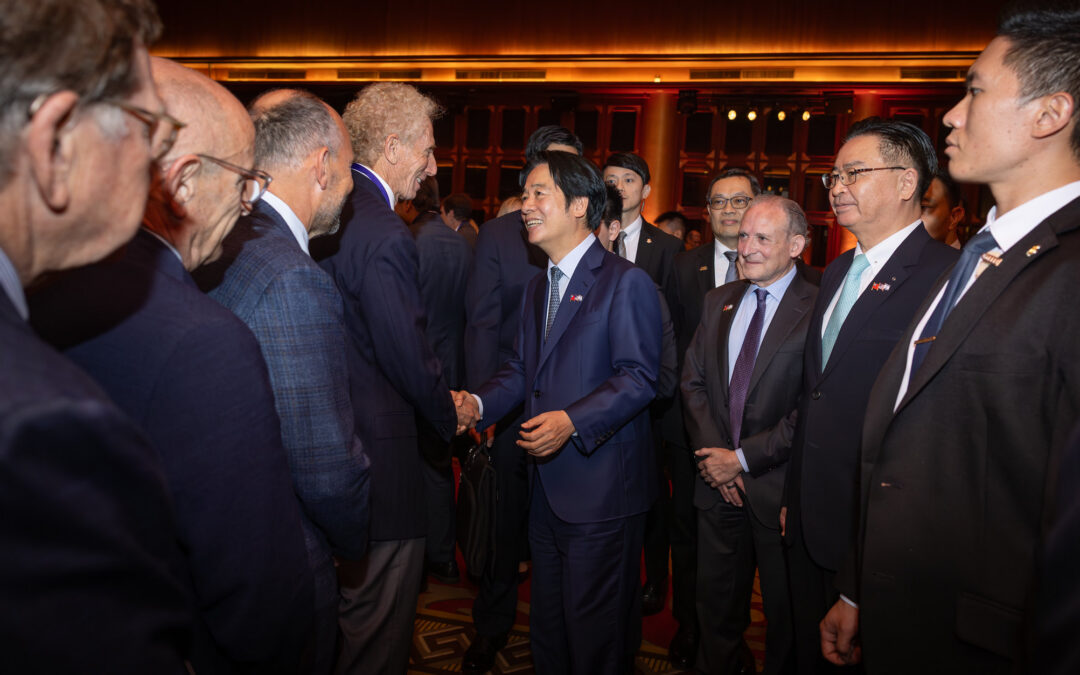
Below, we offer an article submitted to us by Peiyi Yu, a journalist based in Taiwan, on the deepening links between Taiwan and Israel, which captures Taiwan’s recent rightward shift and the increasingly open calls among Taiwanese nationalists to emulate the Israeli model. These trends are a crucial dimension of contemporary Taiwanese politics that remains sorely underreported in the Anglosphere, despite being central to the new DPP administration of Lai Ching-te. We are therefore enthusiastic to publish this piece. As is usual for intakes written by authors outside of and unaffiliated with Chuang, however, the viewpoints expressed below are not our own. Often, texts that we translate, print, or reprint from the Sinophone left contain a certain residue of liberalism, including a commitment to the ideals of “democracy,” “human rights,” and “self-determination” within a “rules-based international order.” These are all concepts we see as little more than costumes to disguise the monstrosity of capital, which is as brutal in the ghettoes, prisons, and daily workplaces of “democratic societies” as in the most militaristic of “authoritarian regimes.”
In this case, the piece below contains only a few minor issues of this type, visible in its periodic implication that there exists some essential difference between authoritarian and democratic systems, or even that class rule in Taiwan is somehow fundamentally different from class rule in supposedly more authoritarian countries (not to mention democracies like Israel). In fact, like any other capitalist democracy, Taiwan is a class dictatorship where the wealthy rule unopposed over the vast majority. The violent kingdom of property is thinly disguised by the facetious ritual of ballot-casting. Similarly, as in Europe or the US, the façade of civil society collapses once you reach the substrata of migrant workers and similarly racialized populations at the bottom of society, who are often stripped of even the illusion of democratic participation. Though the article below takes seriously Taiwan’s claim to democracy and therefore treats recent trends as somewhat surprising, for most of our readers, there will be nothing particularly shocking about the rightward shift in Taiwan or its increasingly close relationship with Israel. Most of these differences remain at the level of discursive style.
At times, the piece also seems to adopt a position on China similar to that of the very right-wing forces it is criticizing, imagining that the “existential threat” posed by the mainland is genuine and treating the “mounting military pressure” of China as if it truly does signal an imminent invasion. In reality, we would argue that threats of military intervention are largely a diplomatic game forced by US interventions in the region. There is essentially no indication that the Chinese government intends to seize Taiwan by force. Nonetheless, Chinese policymakers must state their intent to do so with regularity in order to assert their fundamental claim of sovereignty in the face of US intervention. Moreover, the Chinese state clearly does have a plan to exert exclusive economic rights over the South China Sea according to the same playbook the US has used in the Gulf of Mexico and across the Pacific. By gradually out-competing Taiwanese capital and expanding its geographic control over the region, the Chinese state’s strategy seems more intent on advertising competent governance and economic dynamism to make reintegration a broadly attractive prospect.
Rather than a Chinese invasion, then, the most likely scenario for a war in the region is that Taiwan’s own rightward shift (or perhaps that of the US and Japan) will encourage rapid militarization and then take an increasingly aggressive posture, encouraging adventurist incursions and perhaps even an expansionist drive into the South China Sea or Southeast Asia, justified as a necessary countermeasure to Chinese aggression. While not explicitly acknowledging the fact, by detailing the rise of the right in Taiwan and the appeal to the Israeli model, the article below offers a window into this possible future. We thank the author for their submission, and look forward to further investigations into this and other underappreciated aspects of Taiwanese society.1
– Chuang
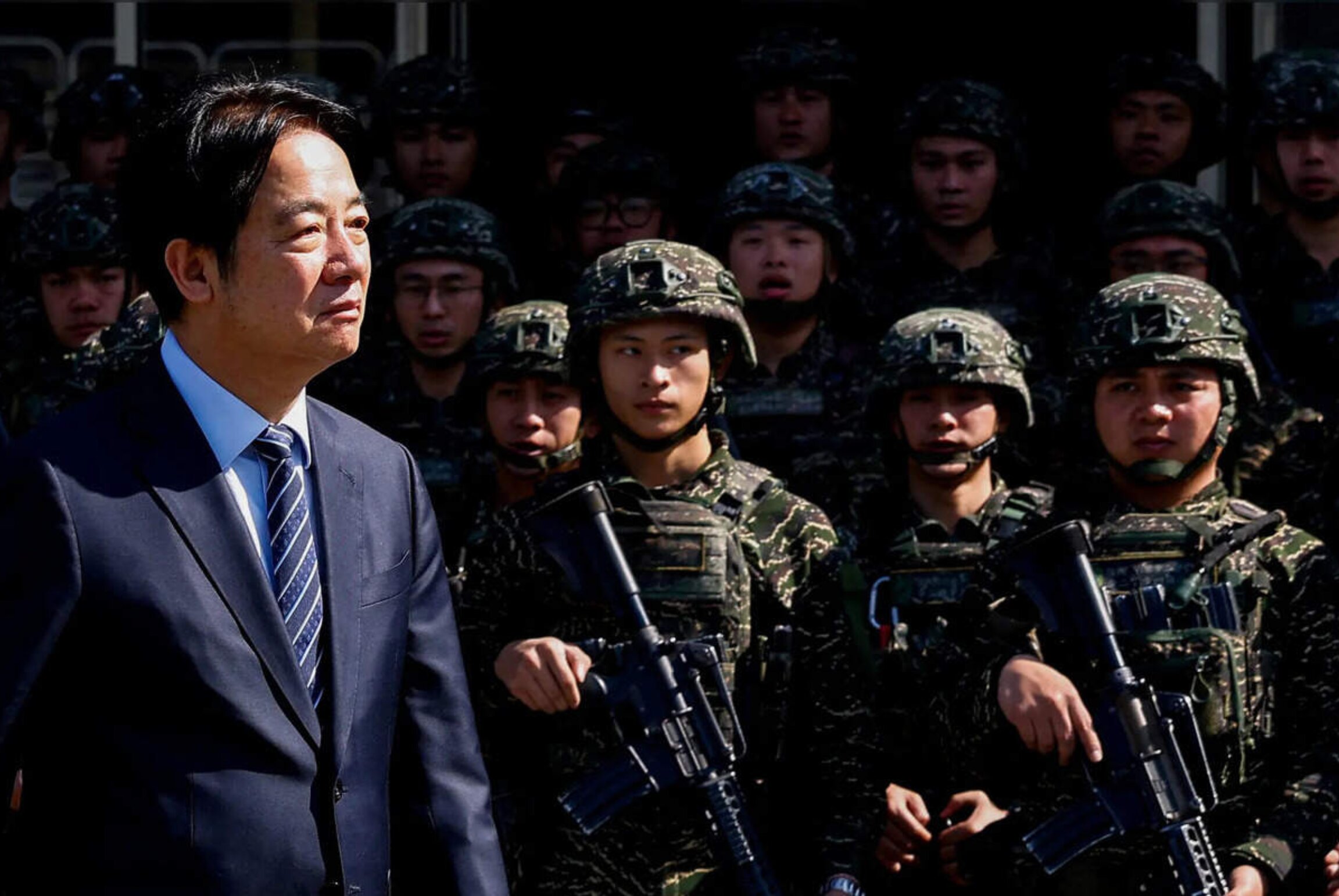
Following the Israel Model, Off a Cliff: Why Taiwanese Nationalism Undermines Its Argument on Self-Determination
On March 24, 2026, Taiwan’s representative to Israel, Li Ya-ping, stood among the rubble of homes in Petah Tikva, a mid-sized Israeli city in the country’s central district that had been struck by Iranian missiles, and a sister city of Taiwan’s Taichung. She visited affected households, met with the city’s deputy mayor, and paid her respects to Israeli settler extremist, Daniella Weiss, as well as elderly Holocaust survivors. In a statement, Li praised what she called Israel’s “whole-of-society civil defense spirit,” which she described as so deeply internalized that it had become a bodily reflex, and as something worth emulating for Taiwan.
A few days earlier, following the U.S. assassination of Iran’s Supreme Leader Khamenei, Taiwan’s Foreign Ministry spokesperson Hsiao Kuang-wei appeared before the media to deliver an official statement: “The Ministry of Foreign Affairs condemns Iran’s recent indiscriminate military attacks… Taiwan stands with the international community in supporting the Iranian people’s pursuit of freedom and democracy. We hope the people of Iran will soon live in peace, freedom, and democracy.” Most US allies issued similar responses to the US-Israel aggression against Iran, acquiescing to the US-Israel regime change operation. Vice President of the EU Kaja Kallas called Khamenei’s death a chance for Iranians to shape “a different Iran,” while EU President Ursula von der Leyen cited “renewed hope.” Both condemned Iran’s retaliatory strikes while remaining largely silent on the unprovoked US-Israeli bombardment.
But no US ally aligned so rapidly with Trump’s attack on Iran as Taiwan, which did not even offer a nominal call to respect international law and the UN Charter. Taiwan’s statement reflects the consolidation and reaffirmation of a clear alignment between Taiwan and Israel that has been developing for over two years. Since the outbreak of the Israel-Hamas war in 2023, Taiwan’s government, led by the Democratic Progressive Party (DPP), has sided unconditionally with Israel. Through eighteen months of Israel’s genocide in Gaza, tens of thousands killed, Israel’s weaponization of aid, and its expansion of settlements, the DPP has offered no criticism of Israel’s actions. Instead, Taipei promotes the narrative that “Taiwan is the least antisemitic country on Earth,” and that Israel and Taiwan share a struggle for independence that the world refuses to accept.
This is the story that the war in Iran has now brought into sharp relief: Taiwan, a democratic society living under the permanent shadow of invasion by an authoritarian neighbor, has not responded to US foreign policy and the genocidal wars Israel is waging with the skepticism or moral ambivalence one would expect from a people who understand existential threat. Instead, its government has sought ideological, diplomatic, and increasingly institutional alignment with the U.S.-Israel axis. Moreover, this alignment comes at a time when much of the world is slowly distancing itself from this axis.
To understand the strange turn of events that led Taiwan to align with Israel and unconditionally endorse all that it claimed to stand against, we must understand the rise of the metastasizing Taiwanese nationalism laundered in the language of “self-determination.” After a long period of incubation that went largely unnoticed by English-speaking observers, developing gradually within Taiwan’s political discord, the current iteration of Taiwanese nationalism decisively entered into mainstream politics in the wake of the 2024 election, when its major proponents were able to form a minority government. Since the Taiwanese nationalists took power, they have been pushing to rapidly transform Taiwan’s democratic body, and its international engagement.
While the domestic rise of what Hannah Arendt would call the “rude force of nation” and the mobilization of an increasingly partisan “democracy” vs “authoritarian” diplomacy has become a sad and strange plague that is transforming many democracies around the world into outwardly hideous forms, Taiwan’s existential anxiety exacerbates the drive for Taiwanese nationalists to align with the US-Israel axis and to erode Taiwan’s democratic institutions, portraying the porous democratic plurality as a threat to “national security,” insofar as it can serve as a vehicle for “China’s infiltration.”
Taiwan’s nationalist turn
Since 1949, when the defeated Republic of China government retreated to Taiwan after the Chinese Civil War, the island has existed in political limbo, functioning as a de facto independent country that gradually lost its international recognition. Taiwan’s two major parties today stand divided over the question of national identity, and relations with the People’s Republic of China: the Kuomintang (KMT) favors closer economic ties and dialogue with Beijing, while the Democratic Progressive Party (DPP) is more committed to Taiwanese independence and a confrontational foreign policy toward the PRC. The DPP has governed since 2016, winning power on a platform that Taiwan needs a strong government committed to independence to defend itself against interference from China.
From 2016 to 2024, the Tsai Ing-wen administration’s defining posture was deliberate restraint. As she took office in 2016, she found Taiwan in a peculiar predicament. The US-China tension that escalated because of China’s expansion in the South China Sea and the US “pivot to Asia,” has resulted, for Taiwan, in mounting military pressure by China – repeated incursions into Taiwan’s air defense identification zone, intensifying rhetoric that threatens the annexation of Taiwan under the guise of “reunification,” and large scale annual live fire exercises around Taiwan which started after US Speaker Nancy Pelosi’s visit in 2022. Tsai answered China’s hostility with the policy of “maintaining the status quo,” neither provoking Beijing nor capitulating to it.
Domestically, her government pursued a series of progressive reforms that earned Taiwan an international reputation disproportionate to its size. Taiwan became the first Asian country to legalize same-sex marriage in 2019. The welfare system was overhauled, expanding Taiwan’s social safety net by increasing elderly pensions and long-term care coverage, and boosting early childhood care and preschool support to widen access and affordability. To reconcile Taiwan’s authoritarian past, her administration established a formal transitional justice and reparations process for victims of Taiwan’s martial law period.
Lai Ching-te, who defeated two opponents to win Taiwan’s 2024 presidential election with a minority, came from within Tsai’s own DPP party. However, Lai came from the hardline Taiwanese nationalist wing of the party, which considers the de facto sovereignty of Republic of China in Taiwan as an instrument for Taiwan’s “pragmatic” national independence. Although Lai served as Tsai’s Vice President, his faction has long chafed at what it saw as Tsai’s excessive caution. Where Tsai had carefully avoided the word “independence,” Lai, on his inauguration day, called on China to “face the reality of the Republic of China (Taiwan),” effectively demanding China “face the reality” of Taiwan’s sovereignty. The era of strategic ambiguity was over, at least in tone.
The domestic shift was equally pronounced. Where Tsai’s administration had centered on progressive social reform, Lai pivoted to nationalist identitarian politics, with “national security” deployed as a near-universal justification. State resources were mobilized to support what Lai described as the “local cultural industry” against the influence of “Chinese nationals.” The loyalty of naturalized citizens originating from China, Hong Kong, and Macao was openly questioned by Lai, DPP politicians, and government-aligned pundits. In 2025, pro-independence activists, later backed by the DPP (who face the legislative challenge of having a minority in the Parliament), attempted to recall every eligible opposition legislator using Taiwan’s unique recall constitutional device, framing the mass campaign as necessary to “counter China’s influence.” At a rally in June 2025, Lai himself called on supporters “to drive out all the impurities, until all that’s left is an iron will to defend our sovereignty and safeguard our democracy.”
In March 2025, the administration cited “national security concerns” when deporting Chinese influencers who had advocated China’s “reunification by force.” By August, two Japanese influencers deemed sympathetic to Beijing were also deported on “national security” and “public order” grounds. As DPP politicians and nationalist commentators scrutinized the identities of “Chinese spouses” and stoked fears about China’s “demographic campaign,” the administration launched identity investigations on naturalized Chinese Taiwanese. Tech billionaire Robert Tsao, who initiated the 2025 recall movement, wrote in an op-ed calling for speech controls: “Taiwanese people should recognize that the idea of unification is a barbaric remnant of the agricultural era and should be eradicated, just as European countries have banned the spread of Nazi ideology.” It is in this political context – a government that has repositioned democratic identity around nationalist militancy rather than liberal pluralism – that Taiwan’s deepening embrace of Trump and Israel must be understood.
The AIPAC visit
Taiwan nationalists’ identification with Israel predates the current administration and runs deeper than diplomatic calculation. Within pro-independence nationalist circles, the Zionist project has long served as a mirror: a small democracy encircled by hostile powers, sustained by military resolve and a great-power patron, animated by the conviction of its own existential righteousness. That “David versus Goliath” narrative has found fertile ground in a strand of Taiwanese political thought that has always understood Taiwan’s predicament in similar terms. Besides the ideological affinity, there is also a more practical observation that Taiwan’s leadership has not been shy about making: Israel has spent decades demonstrating that a small state can cultivate durable, bipartisan support in Washington, not merely as a dependent, but as a partner with its own constituency. For a government whose survival depends on American commitment, that is worth paying attention to.
This ideological affinity has been actively cultivated by figures who now sit at the center of Taiwan’s political establishment. Huang Wen-ju, the founder of the pro-Taiwan think-tank Global Taiwan Institute, and the political sponsor of both current Vice President Hsiao Bi-khim and Foreign Minister Lin Chia-lung, exemplifies the cohort. Responding to Israel’s assault on Gaza in an op-ed, Huang wrote: “Such fanatical behavior by Jews is certainly unacceptable. However, their willingness to sacrifice everything, including their lives, for the glory of Israel is moving and worthy of emulation by Taiwanese people.” The sentence is a precise map of the worldview: what matters is the lesson in total commitment to national survival.
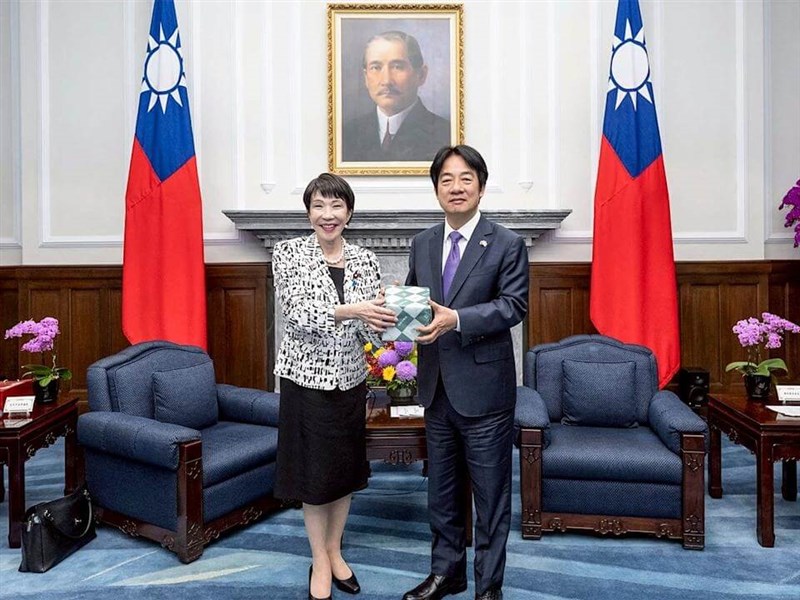
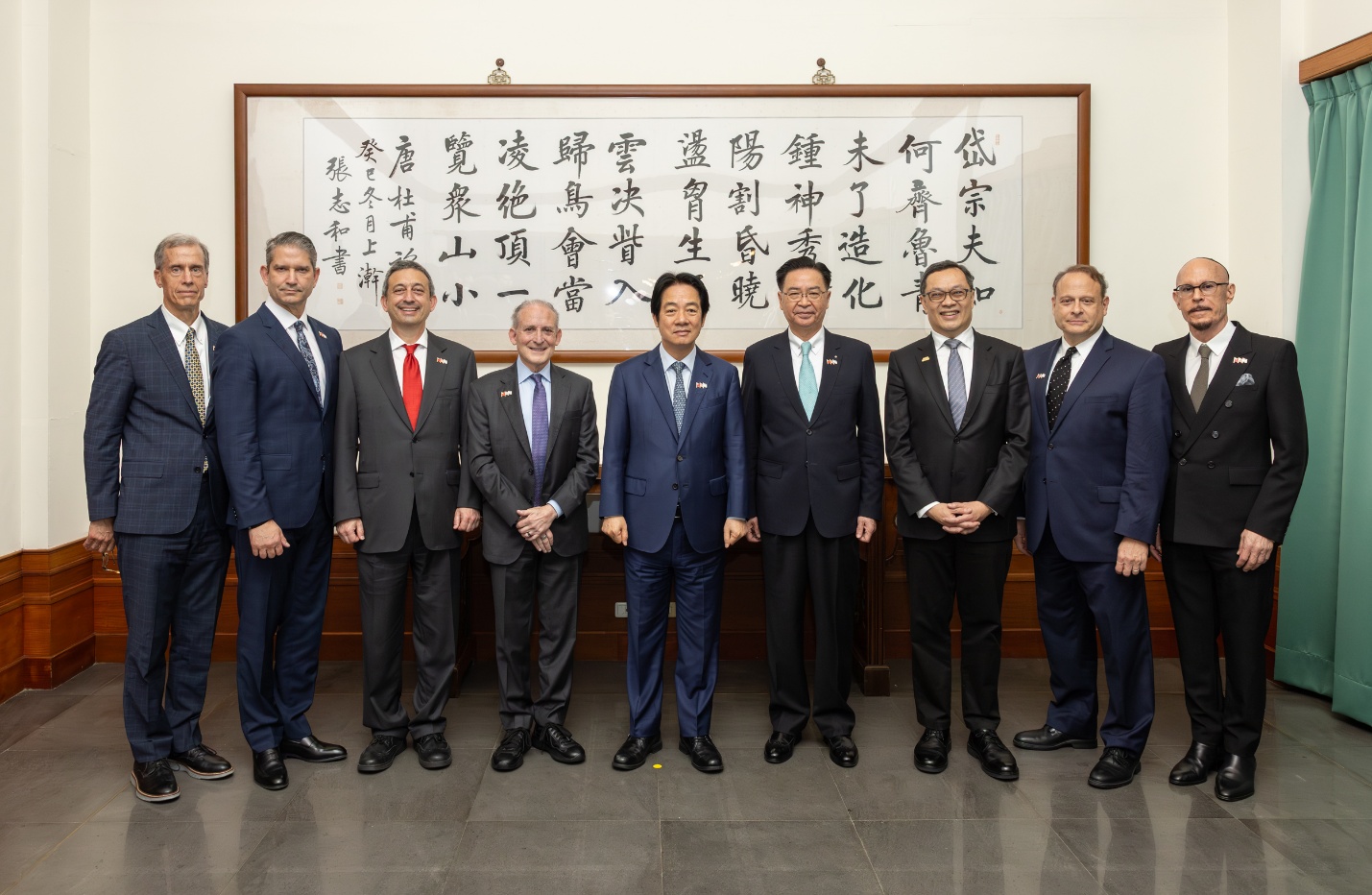
Between October 24 and 28, 2025, American Israel Public Affairs Committee (AIPAC), a DC-based bipartisan Israel lobby, sent what Taiwan President Lai’s office described as a 200-person delegation to Taipei, the “leaders from politics, business, and other sectors of the United States,” in what Taiwan’s Foreign Ministry confirmed was the largest recorded foreign visit in the organization’s history. The meeting was not announced to the public before it concluded and was closed to the press. Taiwan’s Foreign Ministry had been citing China’s interference and harassment to justify its restrictions on events, and now it is calling the hosting of AIPAC behind closed doors as a “standard practice.” AIPAC issued no public remarks about the visit.
The meeting was nearly two years in the making, the culmination of a deliberate strategy by the Lai administration to cultivate AIPAC’s attention as a channel into Washington. Since the start of Israel’s genocide in 2023, Taiwan has been making symbolic but significant diplomatic gestures to support the Zionist project. The waves of diplomacy between Israel and Taiwan accumulated into Taiwan vouching to sponsor part of an illegal settlement in the occupied West Bank in July 2025 (a donation Taipei later claimed to have been postponed), and the Israeli Knesset sending a congressional envoy to Taiwan that included 72 Knesset members in September 2025.
The timing of the AIPAC visit was striking. Hours before Israeli Prime Minister Benjamin Netanyahu announced what he called a “forceful” strike on Gaza on October 28, 2025 ( a strike that killed 104 people) Lai stood before AIPAC’s delegation and praised the ceasefire that had preceded it as “the most significant development in the past two years” and “a major diplomatic achievement for US President Donald Trump.” He then added: “I believe that trilateral Taiwan-US-Israel cooperation can help achieve regional peace, stability, and prosperity.” In the two years preceding that speech, Israel had attacked six countries, violated three ceasefire agreements, seized two humanitarian flotillas on international waters, used humanitarian aid as a weapon of war, and systematically destroyed the civilian infrastructure of Gaza. Lai, in his address to AIPAC, expressed his admiration for “Israel’s determination and capacity to defend its territory.”
The Washington calculus
To further understand why Taiwan’s government has made this bet, one needs to understand the particular anxieties of the Lai administration’s relationship with Washington and the specific faction in Washington that Taipei is trying to court. The US-Taiwan relationship entered a period of unusual turbulence after Trump’s return to the presidency. Laura Rosenberger, chair of the American Institute in Taiwan, the US’s de facto embassy, vacated her post in January 2025 and has not been replaced. Trump’s sudden announcement of TSMC’s new US investment plan in March 2025, the ongoing tariff negotiations since July, and a US denial of Lai’s stopover request on American soil, have all contributed to an atmosphere of uncertainty in Taipei about where it stands with the new administration.
Moreover, Taiwan now finds itself on the wrong side of MAGA culture-war politics. When, during the US electoral campaign in 2024, Trump falsely accused Taiwanese Olympic gold medalist Lin Yu-Ting of being a man, Taiwan’s government rallied firmly behind her and Lai called her “a daughter of Taiwan.” For a government whose survival depends on American commitment, being seen in Washington as aligned with the losing side of its culture wars can be fatal, especially in a time when the White House seems to be making life and death decisions on a whim for its allies. Persistent criticism that Taiwan was insufficiently serious about its own defense and should pay for U.S. commitment only added to the pressure.
The faction Lai is attempting to reach is represented by figures like former State Department Senior Advisor Christian Whiton, who in a series of op-eds titled “How Taiwan Lost Trump” and “What Taiwan Should Do” argued that Taiwan should “follow the model of Israel and say that a Taiwanese president will never ask an American president to sacrifice American lives in Taiwan.” Palantir founder Peter Thiel, the sponsor and long-time associate of US Vice President JD Vance, put the new strategic calculus more bluntly: “[Taiwan] is not worth World War III, and I still think it is quite catastrophic if [Taiwan] gets taken over by the Communists.” What Thiel and Whiton represent is a new MAGA doctrine on Taiwan: that the island should take a more autonomous, militarily assertive role in containing China, requiring less American commitment and fewer American resources. In this framework, the now-dissolving mirage of Israeli invincibility projected on the international stage – a heavily armed client state that prosecutes its own wars while maintaining unconditional American political cover – is exactly what Taiwan is expected to become.
Eeling Chiu, the Taiwan Director of Amnesty International, has watched this repositioning with alarm: “Taiwan keeps claiming that it is staunchly committed to freedom, to human rights. Not only is that our national narrative, our public takes pride in being the only country in Asia that legalizes same sex marriage. If we continue to ignore and avoid discussions about Taiwan’s involvement with Israel, this will indeed shake our commitment to human rights.” Taiwan Alliance for Free Palestine (TWAFP) organizer Lala Pika Lau, who has been tracking Taiwan-Israel defense collaboration since the start of Israel’s genocide, noted the opacity that surrounds it: “The government has become more assertive in blending its diplomacy with Israel under the ‘non-red supply chain’ strategy stream. However, there is no way to obtain specific information beyond government rhetoric and reports that rely on government released information.”
The cost of solidarity
Meanwhile, the domestic consequences of this diplomatic realignment have fallen hardest on those who have tried to name what is happening. The first open confrontation came on May 18, 2024, during an anti-genocide protest at a “Friend of Israel in Taiwan” concert, where police stood by as counter-protesters assaulted demonstrators. The security chief of the de facto Israeli embassy in Taipei slammed anti-genocide protester Temir Saqau to the ground in front of officers, none of whom intervened. Police were filmed advising an anti-genocide protester to leave after an unidentified counter-protester shoved her. The same unidentified person was then filmed hurling rape threats at activist Aurora Chang while police stood idly next to her. Since then, anti-genocide activists have been caught in the expanding field of “national security concerns” that the Lai administration has been deploying across an increasingly wide range of targets. The logic of Taiwan nationalism, which frames any criticism of the DPP government as potential service to Beijing’s interests, has made solidarity with Palestine a politically treacherous position. Activists who have expressed it are routinely accused of being tools of “China’s ally,” meaning Palestine.
For example, Andres Chang, a foreign resident living in Taiwan who had to travel out of the country every 3 months to maintain his visa status, protested against Israel’s genocide on March 11, 2024, in a Taipei metro station. On July 10, 2025, when returning from a trip to Japan, he was then denied reentry to Taiwan. In justifying its decision, the Immigration Agency cited “concerns of national interest” and “maintaining public order.” Around the same time, the administration had begun deploying identical language to justify a series of other deportations. The targeting of anti-genocide protesters is not acknowledged as such but is instead laundered through the grammar of national security.
Doxxing has been particularly vicious against activists whose backgrounds allow nationalists to reframe their politics as foreign interference. Lala Pika Lau, who is from Hong Kong, became the subject of a high-profile doxxing piece by ex-Central News Agency director Chu Yu-hsun, who wrote: “Recently there is a friend from Hong Kong who continues to criticize Taiwan’s government for not severing relations with Israel… To put it bluntly, if not for Israel, this friend might not even have the opportunity to escape from Hong Kong.” The implication – that Lau owes her safety to the existence of democratic societies such as Israel, and should be grateful rather than critical – is a precise expression of the ideological trap Taiwan nationalism sets for its critics. She described the logic clearly: “They still subscribe to a Cold War ideology where the camps are divided into the US camp versus the China camp, and they associate Taiwan with the US and Israel’s ‘democratic’ camp, Palestine with the ‘authoritarian’ China camp. So, when I criticize anything about the Taiwan government, they try to misconstrue my opinion in such a way that it sounds like attacks coming from the opposite camp.”
Another point of view
Now, the fever dream of reshaping Taiwan’s democracy in the image of an Israel-like invincibility is driving Taiwan nationalists’ strategic assessment into deeper delusion. In the face of China’s overwhelming force, Lai Ching-te announced to AIPAC that “only the concept of peace through strength can overcome all changes and challenges.” Meanwhile, as the war in Iran and the closing of the Gulf drives Asia deeper into energy crisis, Wang Hao, Huang Wen-ju’s ideological close associate, urged Taiwan to sail its navy with Japan and US to “reopen the strait,” a proposition the Prime Minister of Japan, Sanae Takaichi, rejected offhandedly to Trump. However, Taiwanese nationalists do not have a monopoly on Taiwan’s claim for “self-determination.” Aurora Chang has been one of the most visible anti-genocide voices in Taiwan, and she has consistently maintained her commitment to Taiwanese independence throughout. In her view, Taiwan independence and an internationalist position of solidarity with Palestine are not in opposition but are rather the same position: “If you support Taiwan’s self-determination, then you must support the liberation of Palestine.”
The point that Chang is making is supposed to be apparent within a society that has, over the past 30 years, organized itself into a democratic polity with a growing aspiration for “self-determination,” before developing an exclusionary national identity. For these past few decades, Taiwan has exercised its de facto autonomy through eight presidential elections, with four peaceful transitions of power between parties. It was after Taiwan’s liberation from authoritarianism to democracy that popular consensus gradually shifted to self-identify as “Taiwanese” instead of “Chinese,” all within the span of a generation. In Taiwan’s own political experience, the right to “self-determination” that it asserted crudely but confidently has always been understood in the intuitive terms of liberation, not the manifestation of the nation that has now been engineered to transform the popular support for “self-determination” to distinguish who deserves the full protection of rights and who doesn’t.
However, Chang’s formulation is one that the Lai administration’s entire diplomatic strategy is designed to make unspeakable. The government has invested heavily in a version of Taiwan’s “democratic” identity that is inseparable from its alliance with Washington and Tel Aviv, a version in which “democracy” is a geopolitical category defined by which side of the US-China confrontation you stand on, rather than a set of principles that apply universally. In that version, condemning Iran’s missiles while staying silent on Gaza’s rubble is not hypocrisy. It is foreign policy. What Taiwan’s government is offering Washington, and what Washington is asking for, is a Taiwan that has internalized the Israel model: militarily resolute, ideologically aligned, and willing to fight its own battles without asking too many questions about the battles being fought in its name elsewhere. Whether the Taiwanese public, which grew up with a democratic identity built on the memory of its own authoritarian repression, will accept that Faustian bargain is another question.
An overall excellent article with a 100% correct introduction to it. But is it all just for the sake of anglophonia? Why no edition in Chinese? (New Bloom’s long-term bad habits in this regard are not a model to be copied.)
At the very least, the article should do what even Taiwan’s big 3 English-language media has the good sense to do: bracket actual (ie Chinese) names. Thus, not simply ‘Robert Tsao’ but rather ‘Robert Tsao (曹興誠)’. (For example, who on earth are Eeling Chiu or Aurora Chang ? 邱 something and 張/章 something, presumably, but what?? Again, New Bloom is a bad model.)
There is no Chinese version, as far as we know — the author wrote this in English, then we made some edits to clarify the ideas and language. Good point about including the Chinese characters for names, which we normally do with our own writings and translations. In the future we’ll try to remember to ask the authors to include these. Thanks for the feedback!
As a Taiwanese, I’m grateful for this incisive, topical and much-needed article and for Chuang’s acceptance of this piece.
I’d like to share one friendly disagreement/feedback to the article and one to Chuang’s introduction:
The author clearly articulates their concern about nationalism’s right-wing turn in China, which is very similar to my own concern. But recently, I have become more suspicious of whether the condition of nationalism in Taiwan should be framed as a “deviation or even downfall” from a more “ideal” aspiration toward democracy/self-determination that Taiwanese society once embraced.
Is it possible, instead, that Taiwanese nationalism has contained a mixture of a desire for non-domination and xenophobic sentiment from its inception? I recall reading somewhere that, when presidential elections were first held democratically on the island, the DPP used quite xenophobic rhetoric against mainlanders during the election campaign. The rhetoric was, if I remember correctly, that a KMT victory would bring more mainlanders to the island and force local Taiwanese to share the island’s economic fruits with them. (I apologize for forgetting the source, but it should not be too difficult to verify the actual rhetoric used by the DPP during their electoral battles.)
In the United States, it is still quite common among people on the left to describe democracy as having once been relatively “sound” and as now undergoing democratic “backsliding.” I think many leftists in Taiwan, myself included, also tend to imagine a “pure” democratic foundation on the island—a foundation characterized by a pure desire for liberation and democratic ideals—and to understand its current rightward turn as a kind of descent from that foundation. But this understanding may be based more on a historical “myth” than on what actually happened on the island not so long ago.
To Chuang’s introduction, I totally agree with your point that the juridical democracy embraced by capitalist societies tends to be superficial and far from a genuinely democratic society in which democratic principles penetrate socio-economic relationships (The despotic ways in which employers in Taiwan rule over migrant workers provide clear-enough evidence of this point.) However, I think it is dangerous to suggest that there is “no” meaningful difference between a society with some degree of juridical democracy and one without it, as this is tantamount to implying that the struggle for democracy is meaningless and that all fights should instead orient to capitalism itself. I agree more with the statement that Marxist theorist Ellen Meiksins Wood makes in her book Democracy Against Capitalism: “the greatest challenge to capitalism would be an extension of democracy beyond its [now] narrowly circumscribed limits.”
I’ve already typed too much, but please tolerate one additional note: I think it is also dangerous to suggest that all of China’s aggressive acts toward Taiwan are merely reactions to the imperial encroachment of the US empire, as this risks absolving the Chinese state of responsibility for its own aggression, obscuring the fact that the Chinese state itself has an aggressive and imperial character that is not entirely dissimilar to that of the US state.
I would like to remind us that the first place where China pursued adopting a “one country, two systems” was neither Hong Kong nor Taiwan, but Tibet. China’s aggression toward Tibet in the 1950s was justified by the state as a response to Western powers’ interest in and attempts to influence the region, which was strategically important because of its connection between South and East Asia. In this vein, It does not seem to me that placing all the blame on white/US supremacy fits particularly well with a Marxist approach (which is a curious Western/US centric tendency among US leftists that I hope Chuang does not adopt). I would suggest, therefore, that China’s increasingly aggressive military actions toward Taiwan should at least partly be understood in relation to China’s rising power, rather than being attributed entirely to increasing US aggression in East Asia.